

How to Choose the Right Battery: Pros, Cons & Use Cases
Why Battery Choice Matters
Choosing the right battery for your equipment plays a bigger role in day-to-day performance than many people realize. From runtime and charging schedules to maintenance and long-term costs, your battery directly impacts productivity and reliability. With multiple types of batteries available today, it can be difficult to know which option makes the most sense for your operation. Understanding the differences is the first step toward getting the most value out of your equipment.
In this guide, we’ll take a closer look at the three most common battery types used in floor cleaning and other retail, commercial, and industrial equipment: wet / flooded lead-acid batteries, AGM (Absorbent Glass Mat) batteries, and lithium-ion batteries. Each option comes with its own advantages, limitations, and ideal use cases. Whether you’re prioritizing upfront cost, reduced maintenance, or maximum uptime, the following overview will help you compare your options and determine which type of battery best fits your facility’s needs.
Disclaimer: The lifespan estimates and comparisons below reflect typical performance observed in real‑world commercial and industrial environments, where factors like daily runtime, charging habits, and maintenance consistency have a significant impact.
Wet / Flooded Lead-Acid Batteries
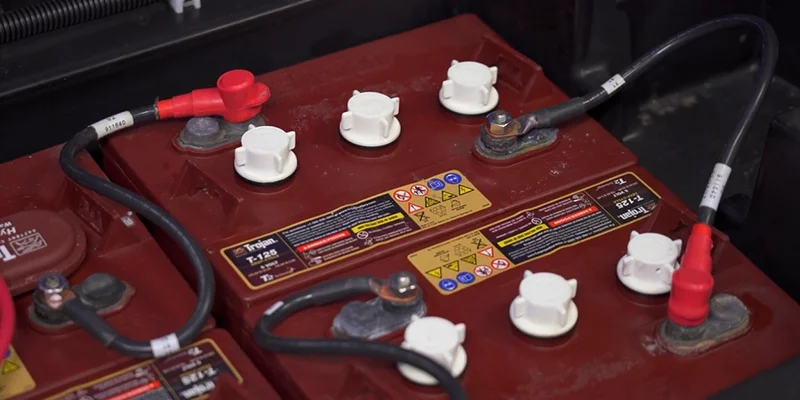
Wet, or flooded, lead‑acid batteries are the most traditional battery option and have been used in equipment for decades. They generate power through a chemical reaction between lead plates and a liquid electrolyte made of water and sulfuric acid. Because the electrolyte is exposed, these batteries require routine maintenance to keep water levels balanced and ensure reliable performance.
Pros:
- Lowest upfront cost
- Widely available
Cons:
- Requires regular maintenance (watering, cleaning terminals)
- Risk of acid spills and corrosion
- Shorter lifespan than AGM and lithium‑ion, typically lasting around one year in high‑use environments
- Lower energy efficiency
Best Use Cases:
- Budget-sensitive facilities
- Equipment with easy access for maintenance
- Facilities with trained maintenance staff
AGM (Absorbent Glass Mat) Batteries
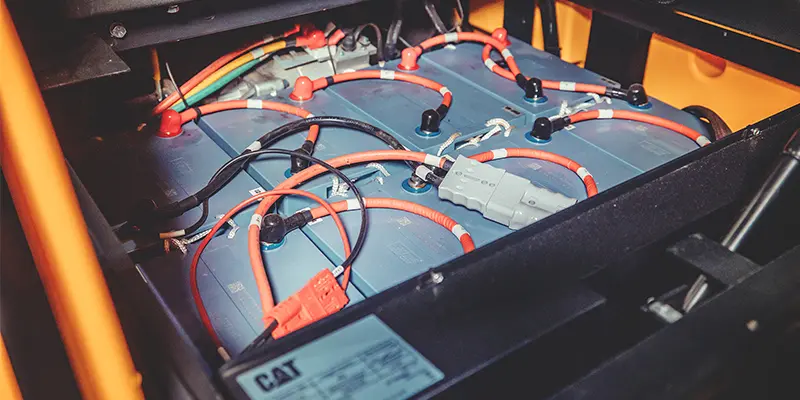
AGM batteries are a sealed version of lead‑acid technology designed to reduce maintenance and improve reliability. Instead of liquid electrolyte, AGM batteries use fiberglass mats to absorb and hold the electrolyte in place, which prevents spills and eliminates the need for watering. This sealed design makes AGM batteries a cleaner, more maintenance‑friendly option.
Pros:
- No watering required
- No risk of acid spills or corrosion
- Faster charging than flooded batteries
Cons:
- Higher upfront cost than flooded
- Shorter lifespan than lithium‑ion, typically lasting about 1–1.5 years in high‑use environments
- Sensitive to improper charging
Best Use Cases:
- Facilities wanting to reduce required maintenance and upkeep
- Moderate-duty cycles with predictable usage
Lithium-Ion Batteries
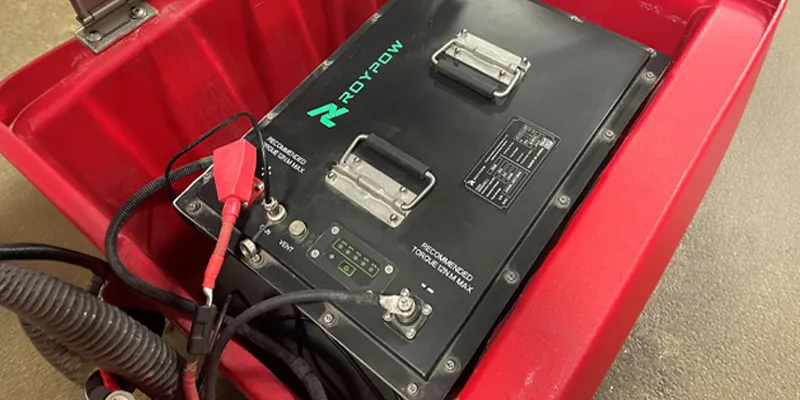
Lithium‑ion batteries use advanced chemistry to deliver consistent power, longer runtimes, and faster charging compared to traditional lead‑acid options such as wet/flooded and AGM batteries. Like AGM batteries, they are sealed and considered maintenance‑free. However, lithium-ion batteries also have built‑in battery management controls that help regulate performance and protect the battery. As a newer technology, lithium‑ion batteries are increasingly popular for facility operations focused on efficiency, uptime, and long‑term cost savings.
Pros:
- Longest lifespan (typically last about 5-10 years)
- Longer warranty coverage (ranging from 5-11 years of full replacement warranty coverage, depending on company)
- Fewer battery replacements over time, reducing long‑term costs
- Maintenance-free
- High energy efficiency and consistent power output
- Fast charging
- Single-pack battery, making it lightweight and compact
Cons:
- Highest upfront cost
- Requires compatible equipment and chargers, so your machine may need to be specially outfitted by a trained technician
- May require additional approvals or code compliance
Best Use Cases:
- High-use or multi-shift operations
- Environments where downtime is costly
- Facilities wanting to reduce required maintenance and upkeep
- Fleets focused on long-term ROI and efficiency
Side-By-Side Comparison
The table below provides a side‑by‑side comparison of the aforementioned battery types to help highlight the key differences that impact performance, maintenance, and long‑term cost. While upfront cost often gets the most attention, factors like maintenance requirements, energy efficiency, and lifespan can have a much bigger impact on total cost of ownership over time.
|
Feature: |
Wet / Flooded: |
AGM: |
Lithium-Ion: |
|---|---|---|---|
|
Cost |
Lowest upfront, moderate cost over time |
Moderate upfront, highest cost over time |
Highest upfront, lowest cost over time |
|
Maintenance Required |
High – regular watering, cleaning, inspections |
None – sealed and maintenance-free |
None – sealed and maintenance-free |
|
Typical Lifespan* |
~ 1 Year |
~ 1-1.5 Years |
~ 5-10 Years |
|
Charging Time |
Slow |
Moderate |
Fast |
|
Energy Efficiency |
Lowest |
Moderate |
Highest |
|
Weight / Size |
Largest and heaviest |
Slightly smaller than wet / flooded |
Smallest and lightest |
|
Best For |
Budget-conscious operations with trained maintenance staff |
Operations with consistent usage patterns and scheduled charging that want reduced maintenance |
Low-maintenance, high-use operations focused uptime, efficiency, and long-term cost savings |
*Please note that actual battery life can vary significantly based on usage intensity, charging practices, and maintenance, which is why real‑world performance often differs from manufacturer specifications.
How to Choose the Right Battery for Your Equipment
Choosing the right battery starts with understanding how your equipment is used on a day-to-day basis. Runtime demands, charging habits, and operating environments all play a role in determining which battery technology will deliver the best performance. While upfront cost is often a driving factor, it’s important to look beyond the initial purchase price and consider long‑term reliability, maintenance needs, and total cost of ownership.
For budget‑conscious facilities with staff available to perform routine maintenance, wet or flooded lead‑acid batteries may still be a practical option. AGM batteries can be a good middle ground for operations looking to reduce maintenance tasks, as long as the correct charger and charging profile are used. Facilities running longer hours, multiple shifts, and/or are looking to reduce replacement costs over time often benefit most from lithium‑ion batteries, which offer fast charging, consistent power, and significantly longer service life.
Ultimately, the right battery is the one that aligns with your budget, your staff, and your operational goals. Taking the time to evaluate how each option fits into your workflow can help maximize uptime, reduce maintenance headaches, and control costs over the life of your equipment.
Need Help Choosing?
We are here to help you make the best, most informed decision for your facility and machines. If you have any questions or would like advice on what type of battery will work best for your needs, please reach out to us below.
Call us: (888) 834-9948
Parts Email: parts@triadservice.com
Service Email: service@triadservice.com


©